
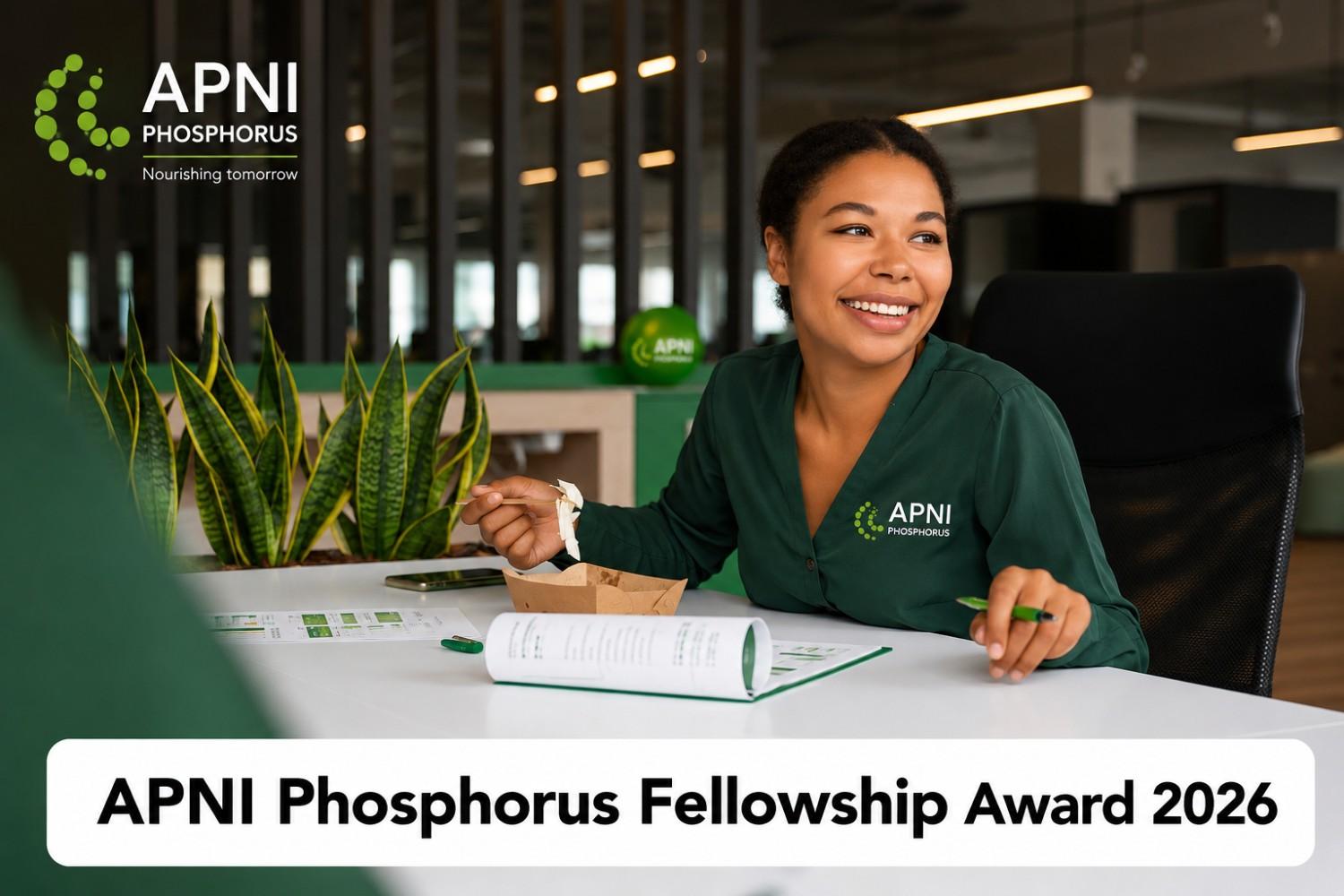
African Researchers Can Apply for USD 5,000 Sustainable Agriculture Fellowship Funding
African scientists and postdoctoral researchers working on innovative agricultural and soil research now have an opportunity to secure international fellowship support through the:
APNI Phosphorus Fellowship Award 2026
The programme supports African-based researchers conducting work in sustainable agriculture, soil fertility and climate-smart farming solutions across the continent.
Successful applicants may receive:
USD 5,000 Fellowship Grants
with up to:
Five Fellowships Available
Applications close on:
07 July 2026
What Is the APNI Phosphorus Fellowship Award?
The APNI Phosphorus Fellowship Award is designed to support African scientists conducting advanced research related to:
- Phosphorus management
- Soil fertility
- Sustainable agriculture
- Crop nutrition
- Climate-smart farming
The fellowship encourages research that contributes toward:
- Food security
- Sustainable farming systems
- Agricultural innovation
- Environmental sustainability
across Africa.
Why Phosphorus Research Matters
Phosphorus is one of the essential nutrients required for:
- Plant growth
- Crop production
- Soil fertility
Efficient phosphorus management remains important because poor nutrient management may contribute to:
- Soil degradation
- Reduced crop yields
- Environmental pollution
- Rising agricultural costs
As climate pressures continue affecting African agriculture, research into sustainable nutrient management has become increasingly important.
Fellowship Funding and Support
Successful researchers will receive:
| Fellowship Benefit | Details |
|---|---|
| Fellowship Grant | USD 5,000 |
| Number of Awards | Up to 5 Fellowships |
| Research Focus | Sustainable agriculture and phosphorus management |
The fellowship funding may help support:
- Research activities
- Fieldwork
- Data collection
- Laboratory analysis
- Scientific project development
Research Areas Supported
The fellowship supports several agricultural and environmental research fields.
Approved Research Areas
| Research Area | Focus |
|---|---|
| Soil fertility & nutrient management | Sustainable soil health |
| Climate-smart agriculture | Climate resilience in farming |
| Precision farming | Technology-driven agriculture |
| Carbon farming | Sustainable environmental practices |
| Sustainable crop nutrition | Efficient nutrient systems |
The programme aims to encourage research that improves agricultural productivity while protecting environmental sustainability.
Who Can Apply?
The fellowship targets:
African Scientists and Postdoctoral Researchers
Applicants must be:
- Based at African universities
- Or affiliated with African research institutions
Minimum Eligibility Requirements
Applicants must meet the following criteria:
| Requirement | Details |
|---|---|
| Nationality | African-based researchers |
| Qualification | PhD required before application |
| Institution | African university or research institution |
| Research focus | Relevant agricultural or nutrient management field |
The fellowship is specifically intended for researchers already holding:
A Completed PhD Qualification
before applying.
Why Agricultural Research Fellowships Are Important
Agricultural research fellowships help support:
- Food production innovation
- Climate resilience
- Sustainable farming systems
- Scientific advancement
- Research capacity development
Africa continues facing challenges related to:
- Food security
- Climate change
- Soil degradation
- Agricultural productivity
Research funding programmes help scientists develop solutions addressing these issues.
Why Climate-Smart Agriculture Is Growing
Climate-smart agriculture focuses on improving farming systems while responding to environmental and climate challenges.
Research in this field may help improve:
- Water efficiency
- Soil conservation
- Carbon management
- Crop resilience
- Sustainable productivity
Governments, universities and agricultural organisations increasingly support research linked to climate adaptation and sustainable food systems.
Benefits of Research Fellowships for Scientists
Research fellowships may provide:
| Fellowship Benefit | Career Impact |
|---|---|
| Research funding | Supports scientific work |
| Academic recognition | Strengthens research profile |
| Networking opportunities | International collaboration |
| Publication support | Scientific visibility |
| Career advancement | Professional development |
Many researchers use fellowship programmes to strengthen future academic and research careers.
Why Precision Farming and Carbon Farming Matter
Modern agriculture increasingly uses:
- Data-driven farming systems
- Smart agricultural technologies
- Environmental monitoring
- Sustainable nutrient practices
Precision farming helps improve:
- Crop efficiency
- Fertiliser management
- Resource use
while carbon farming focuses on reducing agriculture-related environmental impact.
Tips for Strong Fellowship Applications
Develop a Clear Research Proposal
Applicants should explain:
- The research problem
- Proposed methodology
- Expected impact
- Relevance to sustainable agriculture
Highlight Research Experience
Strong applications often include:
- Publications
- Previous projects
- Scientific achievements
- Technical expertise
Demonstrate African Research Relevance
Research connected to African agricultural challenges may strengthen applications.
Important Deadline
Applications close on:
07 July 2026
Researchers are encouraged to prepare submissions early to avoid last-minute problems.
Frequently Asked Questions (FAQs)
What is the APNI Phosphorus Fellowship Award?
It is a fellowship programme supporting African researchers working in phosphorus management and sustainable agriculture.
How much funding is available?
Successful fellows may receive:
USD 5,000
Who can apply?
African scientists and postdoctoral researchers based at African universities or research institutions may apply.
Is a PhD required?
Yes. Applicants must already hold a PhD qualification before applying.
Which research areas are supported?
Research areas include:
- Soil fertility
- Climate-smart agriculture
- Precision farming
- Carbon farming
- Sustainable crop nutrition
Final Thoughts
The APNI Phosphorus Fellowship Award 2026 provides valuable support for African scientists conducting research aimed at improving sustainable agriculture and nutrient management systems.
As climate challenges and food security concerns continue affecting agricultural systems across Africa, fellowship opportunities such as these remain important for supporting scientific innovation, environmental sustainability and future agricultural resilience.
Researchers interested in applying should begin preparing research proposals and supporting documents well before the July 2026 deadline.
